

“The relationship between my foster daughter and her mother is challenging, how do other foster parents deal with that?!”
Even as a teenager, Carolien knew she wanted to help a child who couldn't live at home. Foster daughter Lila was two days old when she came to live with Carolien, her husband, and their two daughters (now 15 and 12). However, growing up with Lila turned out to be very different from growing up with Carolien's own daughters. "Because of her background, Lila regularly exhibits different, challenging behavior. And building a relationship with her biological mother isn't always easy," says Carolien. "That's why I really need to talk to other foster parents about these challenges. At Mockingbird, I find that space to share."
What is Mockingbird?
What if foster families weren't alone? What if they could rely on a support group of foster families around them?
That's Mockingbird . Foster families living near each other form a network, always with an experienced foster family at the center (foster family hub). By connecting foster families, they become stronger and are more successful in providing a loving and stable environment for foster children. The biological parents of foster children and the biological children of foster parents also play an important role in Mockingbird. And the foster children themselves? Thanks to Mockingbird, they experience that they're not alone. They make friends and have fun with other children going through the same things, so they don't have to explain anything to them. They can always turn to the other families in the network for a chat, a game, or a sleepover.
Mockingbird is there for foster children and their parents. This way, more children have a stable and loving environment to grow up in.
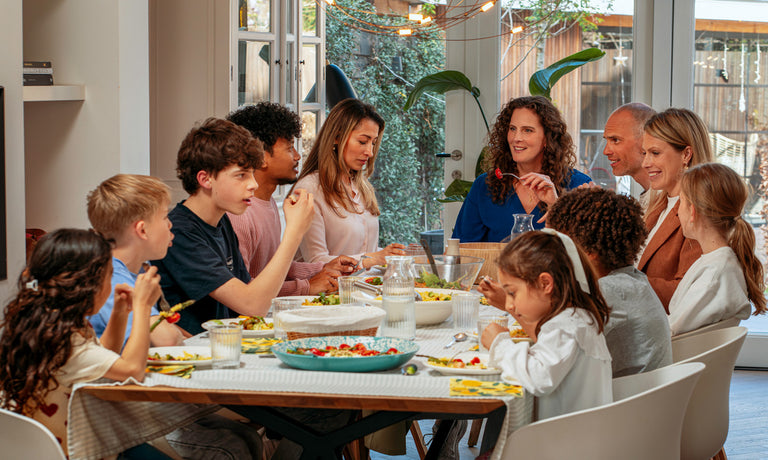
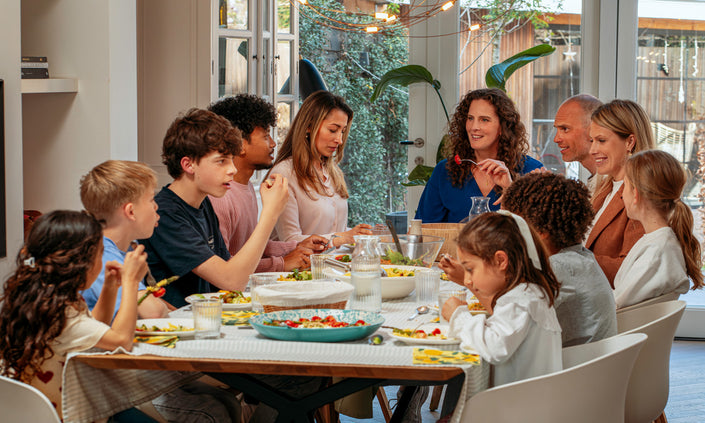
Why are you brown and your sisters aren't? Why do your mom and dad look so different? From kindergarten onward, Lila slowly began to realize she was different, says Carolien. "She found that really annoying, because she doesn't want to be different at all. She wants nothing more than to belong, to our family. She really wants to have the same hair, for example."
Her foster daughter is now 9 years old and has increasingly realized how special her situation is over the years. Besides her mother (foster mother Carolien), she also sees her other mother (her biological mother) regularly. And while it's no problem for anyone to call both women "mama," building a relationship with her biological mother is challenging for Lila. "It's confusing for her," Carolien explains. "Because when her mother is there, it's fun. There are donuts and presents. But she also wonders: why don't I live with my real mom?"
Attachment issues and behavior
At one point, Carolien explained to her foster daughter why she lives with them—and will remain with them throughout her childhood—and not with her mother. Carolien: “You want to explain it because she’s so full of questions and is struggling with things. And besides, the older she gets, the more she understands the situation. But that doesn’t always make it easier. Over the years, Lila has increasingly doubted herself, and at times she shows attachment issues. You can imagine a girl like that thinking: but if I had to leave my mom, maybe I’d have to leave my other mom too? Or maybe my teacher. And what will my friends think of me then? Will they still want to play with me today?” According to Carolien, this uncertainty leads to challenging behavior; for her, as a foster mother, it’s important to continually gauge what’s behind that behavior.
Exchange experiences with other foster parents
"That's why I really needed, in addition to the professional support from our foster care counselor, to hear from other foster parents about how they're coping," Carolien continues. When her foster care organization launched Mockingbird in her neighborhood, Carolien was immediately enthusiastic. "I thought it would be really helpful to exchange stories with other foster parents about their experiences and what works best for them. People in my own circle, who aren't that familiar with foster care, don't always understand why I continue to put so much effort into the relationship between Lila and her mother. I have to explain more. For example, how important it is to lay a foundation now that Lila can build on later, if she needs it."
Dealing with dilemmas
For Carolien, it's quite a challenge to build a positive bond between Lila and her mother. "When they're together, it's clear they love each other very much, which is beautiful to see. But her mother wants more: sleepovers, shopping, seeing each other more often and for longer periods. Lila then tells her she doesn't want any of that."
The relationship between Carolien and Lila's mother is also often complicated. "For example, I get accusations and reproaches that I'm not doing things right. At the time, I can handle it calmly, but at night, in bed, it really affects me. At the same time, I know how deeply Lila's mother is grieving; it's also painful, of course, that someone else is caring for your child. That sometimes makes it such a dilemma, because what's the right thing to do?"
Building trust
Carolien finds meeting other foster families at Annemarie and Twan's hub home incredibly valuable. "Annemarie and Twan are very concerned with caring for everyone. How are you doing? Do the children want to come play or stay the night? You feel welcome and at ease."
Carolien appreciates the support. At the same time, she realizes she also needs to work on openness and trust. And that takes time. "It's very helpful that Alissa (16), Annemarie and Twan's daughter, gets along well with Lila. It helps her loosen up a bit, which gives me more space to connect with other foster parents. But it's still a challenge, because because of her history, Lila actually prefers to stay close to me."
Still, Carolien feels like the foundation has been laid with the other Mockingbird foster families. “At Mockingbird, it's really about the long term. Building trust and relationships. What I'm especially looking for is space to vent to fellow foster parents, without having to justify my thoughts and feelings. And I enjoy learning from other foster parents; how do they handle a challenging situation?”