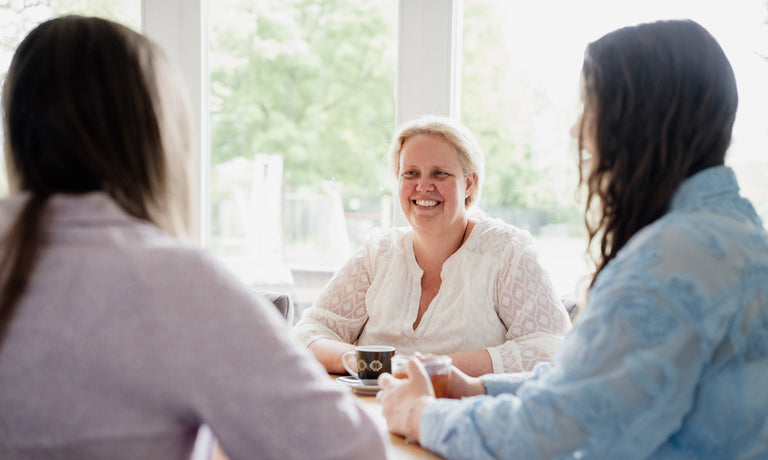
“Staying overnight is not a given for foster children, but it is very valuable.”
Providing a loving place where foster children can be completely themselves. That's Annemarie and her family's greatest wish. They decided to become a hub-home foster family at Mockingbird and open their home to six other foster families. Annemarie: "One of the children had only been to our home a few times and then came to stay with us, for the first time in his life. When he walked in with his backpack, he immediately felt completely at ease. It was so wonderful to see."
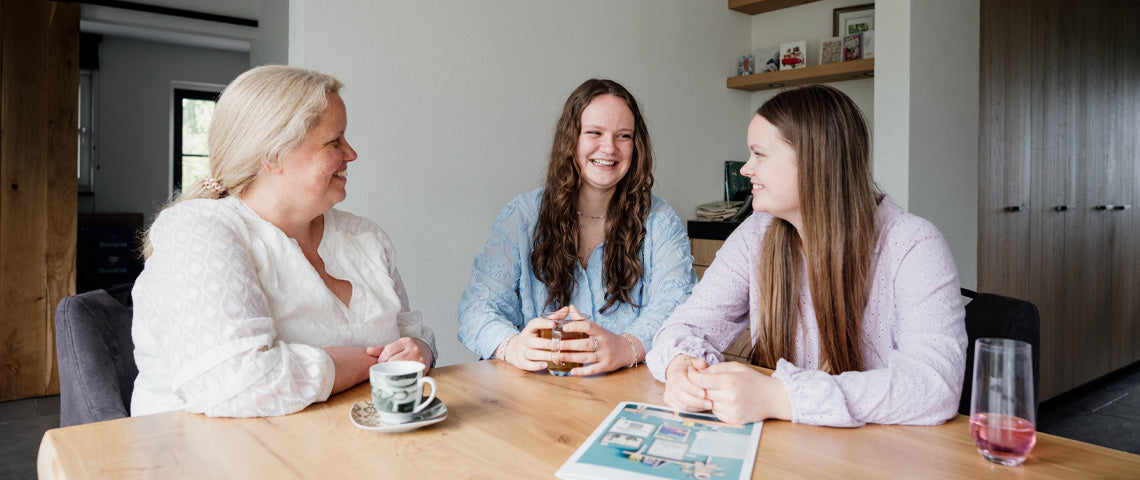
In North Brabant, Annemarie, her husband Twan, and their children Tristen (20), Ilana (18), and Alissa (16) live on a farm with ponies, dogs, and cats. Before they started Mockingbird, they were foster parents for a 9-year-old girl. Daughter Alissa: "It was special that we could really help her, even though it wasn't much effort for us."
Annemarie explains that when the girl returned to her parents, they wanted to help other foster families through Mockingbird. Ilana: "Both my parents have large families, which we really appreciate. And it feels good to contribute to something social."
What is Mockingbird?
What if foster families weren't alone? What if they could rely on a support group of foster families around them?
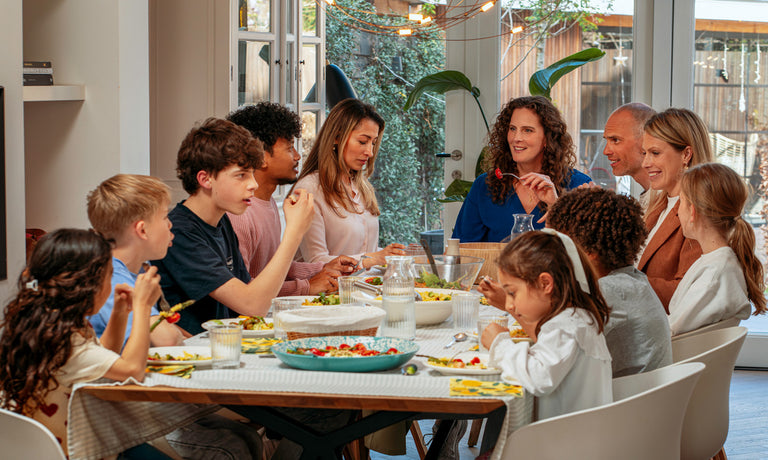
That's Mockingbird . Foster families living near each other form a network, always with an experienced foster family at the center (foster family hub). By connecting foster families, they become stronger and are more successful in providing a loving and stable environment for foster children. The biological parents of foster children and the biological children of foster parents also play an important role in Mockingbird. And the foster children themselves? Thanks to Mockingbird, they experience that they're not alone. They make friends and have fun with other children going through the same things, so they don't have to explain anything to them. They can always turn to the other families in the network for a chat, a game, or a sleepover.
Mockingbird is there for foster children and their parents. This way, more children have a stable and loving environment to grow up in.
Solid foundation
Annemarie's family supports the foster families with advice and assistance. This allows the foster parents to share their stories, the children can stay overnight at the farm, and Annemarie and Twan are on hand to provide support if, for example, there is a sudden need for childcare.
This is helpful for both the foster parents and the children, Annemarie emphasizes. "It's nice for foster children to have a place where they can be completely themselves, besides their own foster family, of course. For example, it can be helpful to choose who a child tells their story to. This can be especially valuable during puberty."
Mockingbird lays precisely this solid foundation: a community of loving adults around the children.
Annemarie says the children quickly feel at home in their home. It's no wonder they often ask, "When can I come back?" or "Can't I join you for dinner?" Annemarie says, "That's really nice to hear, because that's what we do it for. And for foster parents, it's a wonderful opportunity to spend some time together."
Child at home
The foster children enjoy staying overnight at the farm. "It's quite special, because some of them have never spent a night away from home before. Sometimes it's because they find it exciting, sometimes because it involves certain behaviors. Because of this, it's not a given that these children will occasionally go away for a sleepover. As a hub-home foster family, providing warmth and safety is one of our most important responsibilities."
Exchanging experiences
Annemarie and Twan, along with their three children, offer this warm welcome to the other foster families. Every month, the foster parents, their own children, and the foster children gather for a fun afternoon. Ilana and Alissa do crafts with the children or take them outside. The foster parents also participate in the activity they've created. They can also chat freely in between sessions. "We've noticed that building relationships takes time," says Annemarie. "But they're now opening up, for example, venting about a difficult situation they've experienced. Think of a child's challenging behavior, or the challenges of developing a positive relationship between their foster child and their biological parents."
Gratitude
The foster families really appreciate how involved Annemarie and Twan's teenage children are. Ilana: "You can tell the children feel comfortable with us quickly. I'm 18, so a bit older than the other children, but I really enjoy playing and doing crafts with them." Alissa adds: "They just know they don't have to explain anything to us. How nice is that?"